A union and marijuana justice nonprofit are fighting for protections for workers and fairness for small operations as the multi-billion dollar industry gets closer to coming online in Virginia.
Virginia’s retail cannabis sales could start next November, but debate continues about how to establish the market in a way that’s fair to workers and small businesses.
A committee of state lawmakers met earlier this month to go over the details of how a retail cannabis market could be established and regulated in Virginia. The discussion is years in the making and comes after term-limited Republican Gov. Glenn Youngkin has blocked Virginia’s entry into an industry that had over $30 billion in sales last year.
Democratic Gov.-elect Abigail Spanberger has said she supports creating a legalized retail market, so it’s likely it will happen on her watch. Virginia already has medical cannabis dispensaries and it’s legal to possess up to one ounce for personal use. But unlike in neighboring Maryland, it’s still illegal to buy and sell cannabis—for now.
Virginia lawmakers are developing legislation to establish a retail cannabis market in Virginia. They are balancing various goals like making sure small businesses don’t get pushed out by massive corporations; supporting local farmers in this ag-heavy state; righting the wrongs perpetuated by the racist prosecution of the War on Drugs, and protecting public safety.
As Virginia faces budget constraints, lawmakers are banking on raising hundreds of millions of dollars in revenue from taxes and fees from the retail cannabis market.
Worker protections
State Del. Paul Krizek (D-Alexandria), the chair of the commission working on the retail cannabis legislation, said at a hearing on Dec. 2 he envisioned a market with “fair wages and worker protections” and that larger companies would have to agree to “labor peace agreements.”
A labor peace agreement (LPA) is when an employer agrees to be neutral during a union organizing campaign and not interfere with workers’ efforts to organize. And the union agrees not to disrupt the business’ operations.
Kayla Mock, the political and legislative director at United Food and Commercial Workers Local 400, says the union didn’t get labor peace agreements when Virginia set up its medical cannabis market, but she’s more hopeful about their inclusion in any retail market legislation. Mock said Virginia has used labor peace agreements in the licensing of casinos.
“It just literally calls for neutrality on all parts, which should exist anyway but doesn’t unfortunately in labor organizing,” Mock said in an interview.
Federal law says that workers have a fundamental right to organize and be represented by unions without fear of retaliation.
Mock said the reality is that companies often punish pro-union workers; hold what’s known as captive audience meetings where workers are required to sit through anti-union presentations; and intimidate workers trying to organize.
Given that companies almost never get held accountable for breaking the law, tying labor peace agreements to a company’s license to operate “puts some skin in the game,” Mock said.
“It says, ‘If you break this (labor peace agreement), then you’re subject to losing your license,’” Mock explained. “And so there are some repercussions there for not following the law.”
Broad challenges exist for every worker to unionize in the US, and cannabis workers looking to collectively bargain have faced additional challenges given every state has different rules regulating their industry. The big, well-capitalized cannabis companies have also engaged in union busting and dragging their feet in contract negotiations, Mock said.
“When you have a whole lot of money, you can spend a whole lot of money on union busting,” Mock said. “They hire incredibly powerful law firms to bust on their workers.”
Fairness for small businesses
Chelsea Higgs Wise, co-founder and executive director of the nonprofit Marijuana Justice, said the state’s cannabis commission has done good work on creating opportunities for small businesses.
But Wise worries that letting sales begin in November doesn’t give Virginia farmers, growers, operators, and processors enough time to stand their businesses up.
A quicker timeline benefits big, out-of-state companies at the expense of local, Virginia operations and consumers, Wise said in an interview. The current players in the medical cannabis space have a huge advantage by being already established and known to Virginia consumers. A later opening date of the retail market would give small businesses time to set up their operations, grow and process their products, and advertise their businesses.
“We really need to now look at who’s going to be able to participate in day one of sales,” Wise said. “What type of industry does that mean that we’re creating for Virginia: one that is corporate-led, that will probably have higher prices and probably lower product quality.”
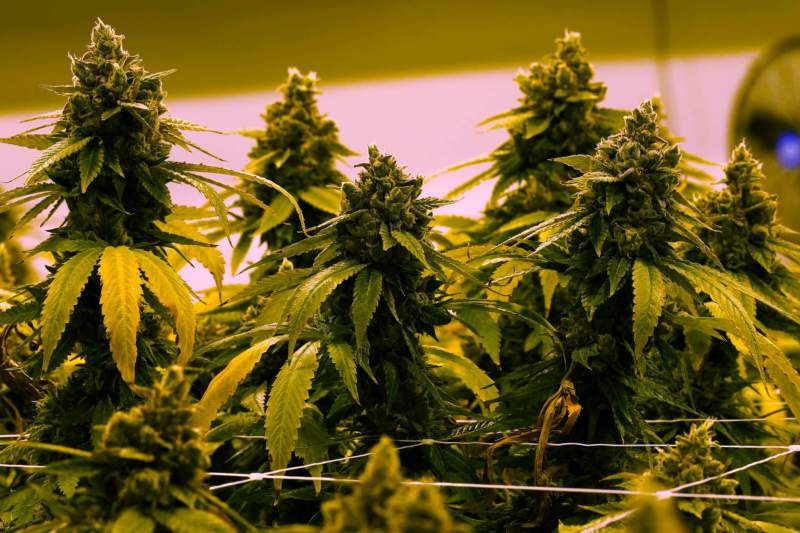
One such small business that’s looking forward to the creation of the retail market in Virginia is Rooting VA, a hemp grower in Doswell.
Owner Mark Tavares says he’s excited about the opportunities coming and the consideration being given to small operations like his. Lawmakers are considering including “microbusiness” cannabis licenses that would allow small operations to sell their products directly to consumers. But he realizes nothing has been set in stone and wonders how well-paid lobbyists could influence the playing field when all is said and done.
“With us being small businesses, a lot of times we wear all of the hats,” Tavares said. “So having the right access and getting all of that in place, and having the time to be fully compliant, that’s where I feel we could struggle.”
For example, to qualify for a microbusiness license, a business would still have to use a seed-to-sale tracking system; and comply with all testing, labeling, and packaging requirements applicable to retail licensees, according to language published earlier this month.
The medical operators on the market now already have that seed-to-sale tracking system in place, Tavares said.
“If all they have to do is click and move it over from the medical side to the recreational side, they’re going to be way ahead of us, if we have to get the license and then start all of our processes,” Tavares said.