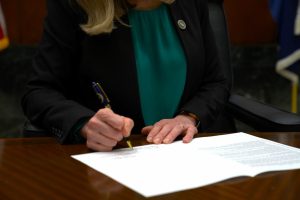
Gov. Abigail Spanberger has until April 13 to decide whether to enact, veto, or amend legislation passed by the General Assembly during its 2026 regular session.
During its 2026 regular session, the Virginia General Assembly passed a slew of bills aimed at expanding workers’ rights, ensuring they get fair pay, and granting them the right to paid leave.
Having passed in the General Assembly, these bills are on their way to Gov. Abigail Spanberger, who has until April 13 to decide whether to enact, veto, or amend them. State lawmakers will meet in Richmond on April 22 to consider Spanberger’s actions on legislation.
Chief among the bills heading to Spanberger’s desk that would expand Virginia workers’ rights is a public-sector collective bargaining bill. This bill would reverse a decades old ban on collective bargaining for hundreds of thousands of state and local workers.
The legislation, carried by Virginia Senate Majority Leader Scott Surovell (D-Mount Vernon) and state Del. Kathy Tran (D-Springfield), would also give collective bargaining rights to home care providers paid with Medicaid dollars and “service employees” on Virginia’s public campuses. Much to their disappointment, university faculty and other non-service workers in public higher education were excluded from the bill.
“From our teachers, to home care workers, to firefighters and frontline workers, public sector employees work hard to provide the best possible services to our families, and they deserve a seat at the table,” Tran said in a March 14 statement. “Together, we will continue to show that Virginia can be one of the best states in the country for both business and workers.”
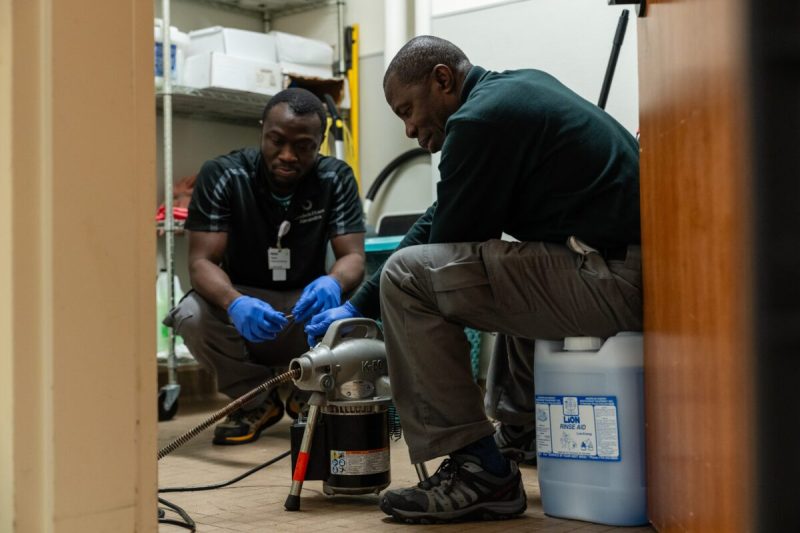
Another bill heading to Spanberger’s desk would make it so local governments can add protections for building maintenance workers. Protections allowed by the bill include that the new company can only dismiss current workers for just-cause or as part of a reduction in its workforce. Today, if a building owner changes the company it uses for building maintenance, then all the workers can lose their jobs with no recourse.
But this new worker retention bill would let localities pass ordinances or resolutions to, for example, require that the new building services employer retain the current employees for a transition period of 90 days. That would give these workers time to negotiate with the incoming company, Jaime Contreras, an executive vice president with the union 32BJ SEIU, said in an interview last month.
“Any contractor, any building owner, any facility that we represent in Virginia that subcontracts the cleaning or say, security, they can bring in their non-union contractor and lower standards for the workers,” Contreras said. “This bill would allow us to pass local laws that basically stops this facility from doing that.”
Virginia lawmakers also passed legislation that would require employers to provide workers with basic protections from extreme heat while on the job.
Lawmakers also passed bills that would help workers get paid more fairly.
They passed a bill to raise the state minimum wage to $15 an hour by 2028. The current hourly minimum wage is $12.77 and is adjusted annually for inflation. They passed legislation to make farm workers eligible for the state minimum wage; currently farmers can pay their workers less than the state minimum wage. Virginia lawmakers also passed legislation making in-home domestic workers eligible for overtime pay.
Another bill that passed would give workers the ability to recoup wages they are owed in the event their employer fails to pay them according to wage laws. And another bill heading to the governor’s desk puts limits on how much a worker’s wages can be garnished.
A bill carried by state Del. Michael Feggans (D-Virginia Beach) that passed would require state agencies and localities to award public contracts to companies that agree to pay their workers competitive wages, or what’s known as the “prevailing wage.”
Virginia workers also may win the right to paid sick leave and paid family and medical leave.
The paid sick leave bill that passed would require all private and public employees to receive one hour of paid sick leave for every 30 hours worked.
Under the paid family and medical leave bill that passed, Virginians would be able to take up to 12 weeks of paid leave each year for things like caring for a new baby or recovering from a serious illness or injury. Virginians would receive 80% wage replacement and protection of their health care coverage.
According to Freedom Virginia, an advocacy organization, a typical Virginia worker taking four weeks of unpaid leave loses an average of $3,700 in income.
“Virginians deserve guaranteed access to paid leave, and they’ll get it with this legislation,” Rhena Hicks, executive director at Freedom Virginia, said of the paid family and medical leave bill. “Hardworking people will no longer have to make impossible choices between their paycheck and caring for themselves or their loved ones.”
One important piece of legislation that lawmakers didn’t pass was a budget bill that many other bills depend on for funding.
Budget talks broke down over disagreement about whether to get rid of a state sales tax exemption for data centers. Virginia lawmakers plan to meet in Richmond on April 23 to pass a budget.
“I am reviewing the legislation on my desk as we continue to focus on lowering costs for families, growing Virginia’s economy, and making sure every Virginia student is set up for success,” Spanberger said in a statement on March 14. “I remain in close contact with leaders in the General Assembly, and I look forward to calling lawmakers back to Richmond on April 23 to pass a budget that delivers on the responsible, pragmatic leadership Virginians voted for this past November.”