Charlottesville school support professionals are slated to get annual 10.5% raises, but some won’t get paid federal holidays.
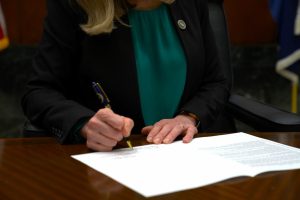
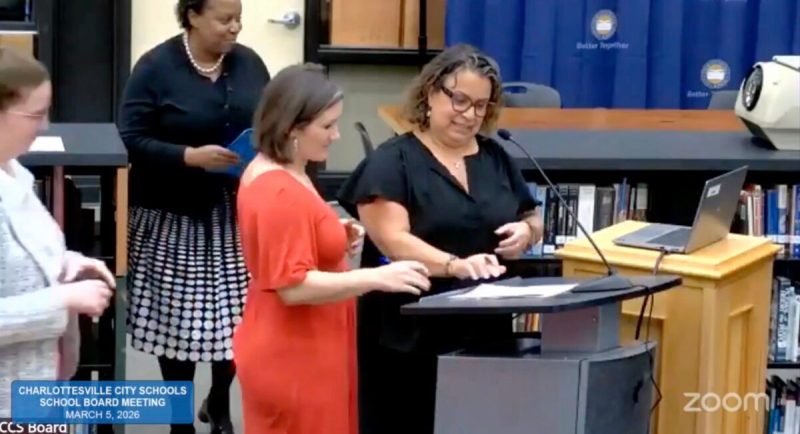
The Charlottesville City School Board last week approved the first collective bargaining agreement for the school district’s support staff.
The new three-year contract covers 267 workers, including safety officers, nutrition managers, and custodians, and calls for annual 10.5% raises from 2026 to 2029.
Shannon Gillikin, president of the Charlottesville Education Association, the union representing the workers, said she was relieved the contract got approved. It now needs to get funded by the city, but Gillikin said she didn’t have any concerns about the city budget, which is scheduled for final approval on April 9.
“Overall, I’m super proud of our contract,” Gillikin said in an interview. “It gave the support staff a significant raise.”
Still, to fund the raises, the school board reduced the working days, and thus the overall pay, of certain workers covered by the contract, Gillikin said.
The working days for instructional assistants went down from 200 days to 189, and working days for safety assistants went down from 200 to 185 days. These workers also will not get federal holidays as paid days off, but other members covered by the same contract will. Fixing that will be a top priority when the contract gets re-negotiated in 2029, Gillikin said.
“I would definitely say the (school) division deciding to not pay them for seven holidays that fall within the school year is a huge hit and makes no sense because some people will get paid for them and some people won’t,” Gillikin said. “That’s what we were trying to fix by coming back to the bargaining table, but the division refused to have a conversation.”
Gillikin also faulted the school division for poor communication that led to a moment of public confusion, something Charlottesville School Board Member Chris Meyer acknowledged in his comments Thursday when the contract was unanimously approved.
In February, the School Board released an unexpected message claiming the union had caused the contract negotiations to break down. That wasn’t true, Gillikin said. On Thursday, Meyer effectively acknowledged as much, saying he wished the email had been worded differently or that he had simply spoken to the union over the phone.
“I think we got some really bad legal advice, personally, when that email went out that led to a communication that—at least I personally, speaking for myself here—was not productive, definitely not constructive,” Meyer said. “And in retrospect, I think I would have written it differently and or probably picked up the phone.”
Gillikin said up until that February message got released, communication between the union and the school division had been positive. She said the lesson for future negotiations is the importance of keeping those lines of communication open.
“Collective bargaining is easier when both parties know it’s in everyone’s best interest to come to an agreement and they continue to work to that,” Gillikin said. “When either side stops communicating and starts assuming is when you get things that blow up that didn’t need to blow up.”
Approval of the Charlottesville school support staff’s contract comes about a year after the school division’s licensed staff won their first union contract.
Many more public education workers could soon find themselves working under union contracts. The Virginia General Assembly is close to passing legislation to lift the state ban on collective bargaining for public employees. Lawmakers are debating whether to exclude Medicaid-funded home care workers and higher education workers from the bill. The legislative session ends on Saturday.
Currently, local governments and school boards have to pass resolutions to approve collective bargaining before their workers can negotiate union contracts. Some, like the Manassas City School Board, have passed resolutions to ban collective bargaining. If and when the public sector bargaining legislation becomes law, the new state law would override these local measures.
Contracts negotiated prior to the state law getting enacted would still remain in effect until they expired, according to Olivia Geho, a spokesperson for the Virginia Education Association.