The legislation includes home care workers and service workers at public universities, but excludes college faculty and graduate teaching assistants.
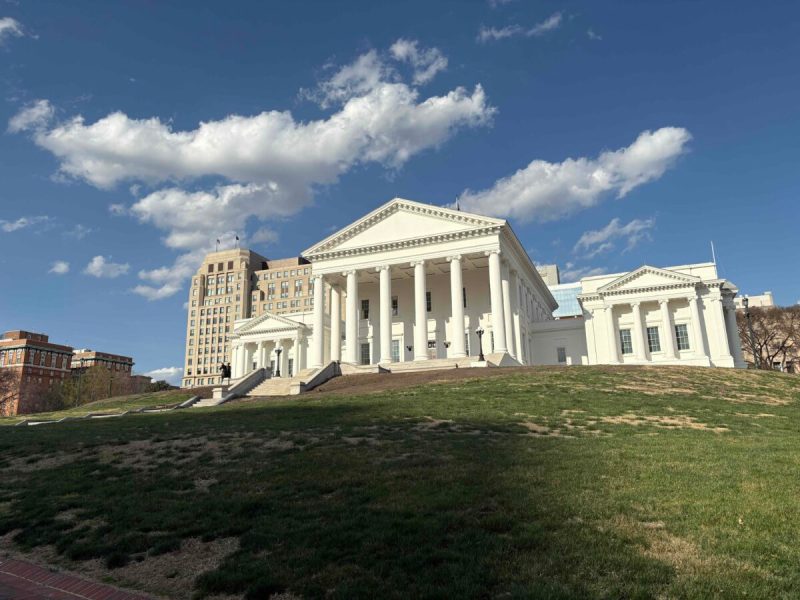
Virginia lawmakers on Saturday passed legislation to lift a state ban on public sector collective bargaining for about half a million public sector workers.
The bill would apply to public teachers, firefighters, maintenance workers, and other employees employed by local governments and school boards, along with people who work at state agencies.
Virginia labor advocates and policy watchers say this is a historic moment given how long the ban was in place and the number of workers it would impact.
“This is probably one of the most significant pieces of legislation that will advance worker rights, specifically for public sector workers, in a very long time,” said Rodrigo Soto, legislative and campaigns director at The Commonwealth Institute for Fiscal Analysis.
The struggle of University of Virginia hospital workers against workplace segregation and for better pay in the 1940s resulted in a 1948 state proclamation that made the ban on public sector bargaining “official state policy.” Then, a 1977 Virginia Supreme Court ruling made public sector bargaining illegal, and in 1993, lawmakers passed a state law banning public sector bargaining.
But in 2020, Virginia allowed for a partial lifting of the ban with a law that gave localities the option to allow public sector collective bargaining. More than a dozen local governments have allowed their employees to bargain, including in Richmond, Fairfax County, Charlottesville, and Harrisonburg.
The new legislation would also allow Virginia’s 28,000 home care providers who get paid through Medicaid to collectively bargain. And it would give collective bargaining rights to service and clerical workers who work on public college campuses around Virginia.
SEIU Virginia 512 president LaNoral Thomas said in an interview that home care workers have been organizing for 20 years to get to this point.
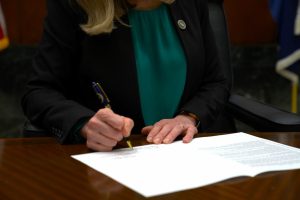
“We are looking forward to the governor signing the bill and the next steps to organizing,” Thomas said.
If enacted by Gov. Abigail Spanberger, the legislation calls for the establishment of a Public Employee Relations Board and a Virginia Home Care Council by July 1, 2028. But as governor, Spanberger has the option of making changes to the legislation and sending it back for the General Assembly to consider on April 22, in what’s referred to as the veto session.
Spanberger’s office did not immediately respond to a request for comment about the bill. But she has been public about her support for home care workers both as a candidate and in her short time in office.
Thomas applauded Spanberger and her administration for their support. Getting the regulations in place and the different entities established will take time, Thomas said.
“It is going to be a lot of work, and we don’t want to sugarcoat that,” Thomas said. “We know it’s going to be a lot of work, and so we just appreciate the willingness to dig in to make it happen.”
The General Assembly also needs to pass a budget that would fund the legislation. Democrats, who control the General Assembly, were unable to agree on whether to repeal a state sales tax exemption for data centers that’s in the budget. State lawmakers will meet again at a special session on April 23 to try to get a budget passed.
However significant the collective bargaining bill is, the fight continues for university faculty and other non-service employees in higher education who were excluded from the bill after initially being included.
“We are thrilled that so many public sector workers will now have the chance to improve their working conditions, but are beyond disappointed that instructional faculty and graduate teaching assistants are being left behind,” said Bethany Letiecq, president of the George Mason University chapter of the American Association of University Professors.
Still, as the state establishes agencies that oversee and study collective bargaining, it’s possible Virginia expands the right to more workers in the future. And as more workers feel empowered by collective bargaining rights and strong union contracts, it’s possible other workers voice support for it.
Soto said it’s not unusual for things that once seemed impossible to become a reality after years of advocacy, as was the case with the 2020 law that opened the door for localities to opt into public sector bargaining. He encouraged any workers feeling discouraged to keep up the fight.
“If no one raises their voice on this issue, then the Legislature could very likely just think that this is the end of the conversation,” Soto said. “Like any good social movement, you take what you can now, regroup, and come back year after year until you’re included.”